|
A custom animatronic dinosaur is not a product you pull off a shelf. It is a machine that has to be engineered around one specific site, one specific audience and one specific show. That is why serious manufacturers run every project through the same five steps: precise needs assessment, detailed planning and engineering, prototype validation of motion and stress, full-scale fabrication under strict material and control standards, and expert installation with ongoing maintenance. Skip a step and the problem does not disappear. It simply surfaces later in the schedule, where it is more expensive to fix. A model that is 30 cm too wide for the service corridor. A jaw movement added after the frame is welded. An indoor-grade electrical system specified for a rain-exposed plaza. Every one of those is a step-one decision that becomes a step-four crisis. This guide follows all five steps in the order they actually happen, using the real material specifications, movement lists, control options, price bands and lead times you will see on animatronic dinosaur product pages and factory quotations today.
Why custom work needs a five-step processStandard models move fast because the engineering is already done. Custom work is different: every non-standard dimension, every extra movement and every unusual environment creates a design decision, and design decisions made in the wrong order are what cause delays and change orders. What "custom" actually means in this industryIn practice, OEM and ODM customization covers species, overall length, colour scheme, skin texture, the number of movements, the roar sound and the interactive control method. A manufacturer will normally issue a 3D design preview within three to five working days so you can approve proportions and posture before any steel is cut. Minimum order quantity is usually a single unit, and both ready-stock standard models and fully custom builds sit in the same catalogue. If a supplier cannot show you a 3D preview step at all, you are not buying custom work — you are buying a stock model with a colour change. The three decisions that must not move once production startsThree things are cheap to change on paper and expensive to change in steel: the movement list, the indoor versus outdoor material grade, and the mounting footprint. The movement list determines how many actuators and linkage points the frame must carry, so adding a tail swing or a tongue movement after welding means cutting, re-welding and re-testing a finished structure. The material grade determines whether the skin, electrical components and surface coatings are rated for rain, UV and temperature swings. The mounting footprint determines the base plate, the anchor pattern and whether the model can pass through your access route at all. Finalize all three in writing before the deposit, then treat them as frozen. Where the real schedule risk sitsProjects rarely fail on the fabrication line. They fail at the boundaries: between the venue design team and the factory, between shipping dimensions and the site gate, and between installation and the people who will operate the model day to day. The five-step process exists to make those boundaries explicit. Each step produces one signed document — the brief, the design pack, the motion test record, the factory acceptance test, and the commissioning and maintenance handover. If a supplier cannot name those five documents, the process is not really being followed.
Step 1: Define the brief and the operating environmentThis is the step that decides the budget. Not the species, not the paint, not the roar — the environment. A model specified for an indoor museum hall and the same model specified for an exposed outdoor plaza are two different builds that share only a silhouette. The site survey checklistBefore anyone talks about a Tyrannosaurus, walk the site and record the following. Any item you cannot answer is a risk you have chosen to carry.
Indoor versus outdoor build specificationThis single choice changes the materials list, the warranty discussion and the maintenance calendar. Outdoor models are built with fully sealed IP65 electrical components, anti-UV silicone skin and an anti-rust treated steel frame. Indoor models carry basic splash protection only, because they never see rain, and they generally keep their skin finish longer.
Species, size and scaleLife-size is the default, but life-size is a range, not a number. Published factory sizes for the most requested species are a useful starting point for the brief.
Scaling down is a legitimate budget tool, and it reduces material consumption and shipping volume. What it does not reduce is scrutiny. A 75% Tyrannosaurus still has to read as a Tyrannosaurus to a visitor standing next to it, the head still has to clear the doorway on the way in, and the tail section still has to be long enough and heavy enough to swing convincingly. Check silhouette, access and motion separately before accepting a scaled design.
Step 2: Plan, sketch and engineer the modelOnce the brief is frozen, the work becomes engineering. This is the stage where the model stops being a picture and becomes a structure with a centre of gravity, a load path and a defined travel range for every joint. It is also the stage where most of the money is actually committed, because the design pack determines how much steel, foam, silicone and control hardware the factory will buy. From reference material to a 3D design previewA credible design process starts with reference: skeletal drawings, museum scans, published palaeontological proportions and photographs of comparable builds. The design team then produces a digital model, plans the scale and proportions, defines each movement function, and checks weight distribution and balance. For a large model, balance is the single most important output of this stage, because a long neck or a heavy tail moves the centre of gravity well outside the footprint of the base plate. The deliverable you should receive before production is a 3D design preview showing posture, proportion, colour direction and the location of the main joints. Reputable suppliers issue this within three to five working days of a confirmed brief. Approve it in writing, because from this point onward changes are no longer free. Choosing the drive system for each jointNot every joint should be driven the same way. Heavy limbs, fast facial movements and precision positioning have different mechanical requirements, and the drive choice drives both the cost and the maintenance profile.
The practical rule is that the number of actuators, not the size of the dinosaur, is what drives programming time and service complexity. A large model with four movements can be simpler to own than a small model with fifteen. Freezing the movement listWrite the movement list into the contract, function by function. This is the list you will test against in Step 3 and Step 4, and it is the list the spare parts kit will be built around.
Specifying the control modeThe control method decides how visitors experience the model and how your staff operate it. Standard options across the industry are infrared sensor activation, handheld remote control, automatic looping or timer operation, coin or token operation, push-button operation, touch sensing, and bespoke show control for venues that need the dinosaur synchronized with lighting, video or narration. Whatever you choose, confirm three details in writing: the activation range and field of view of any sensor, the sound pressure level at a typical visitor position, and the location of the emergency stop. Coin operation also depends on a reliable power feed and a serviceable controller door, so it should be planned at this stage rather than retrofitted.
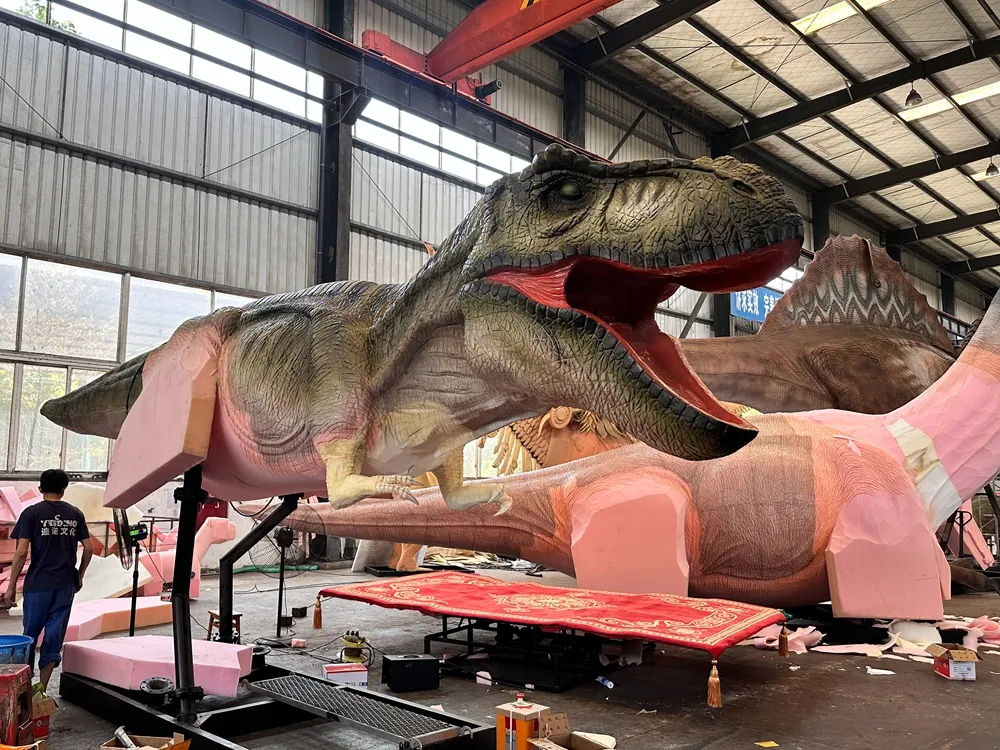
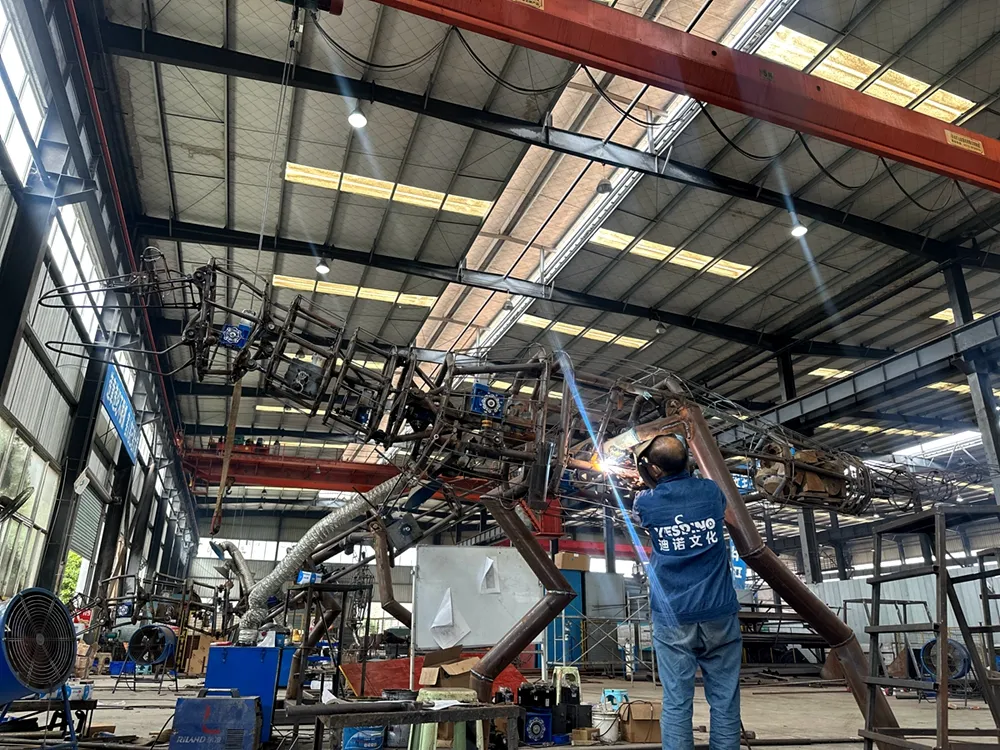
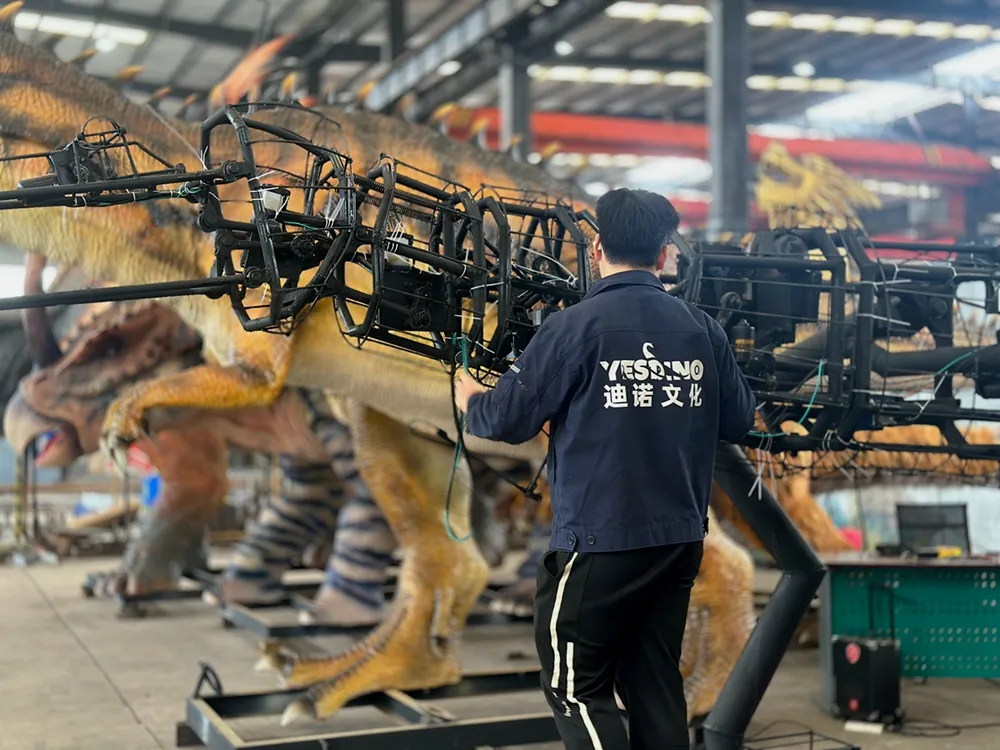
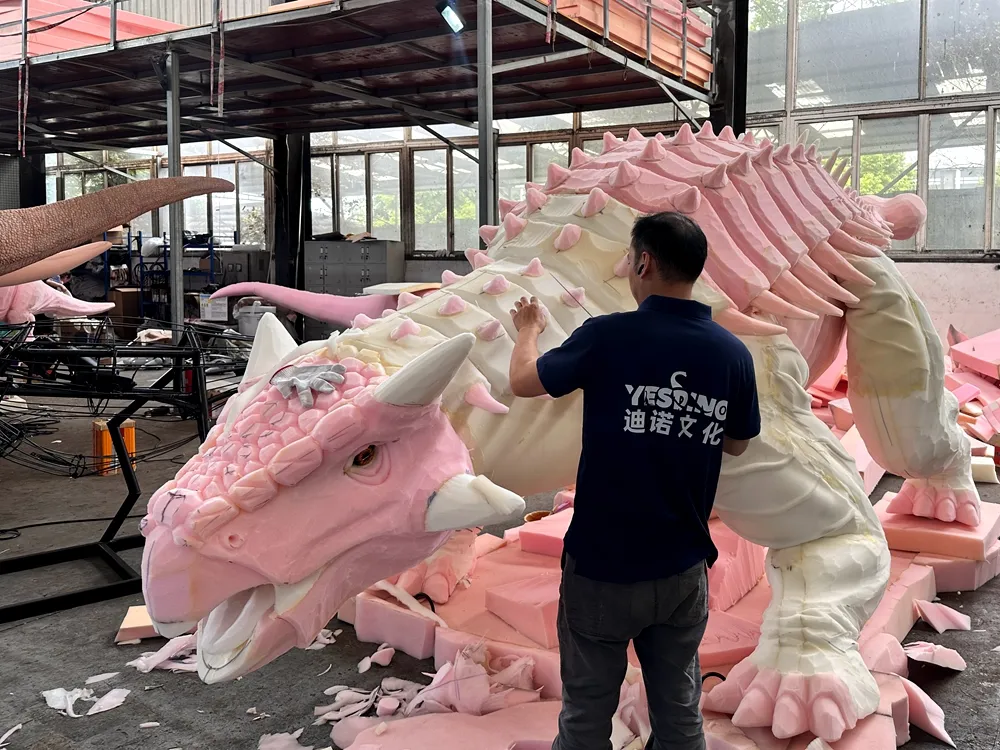
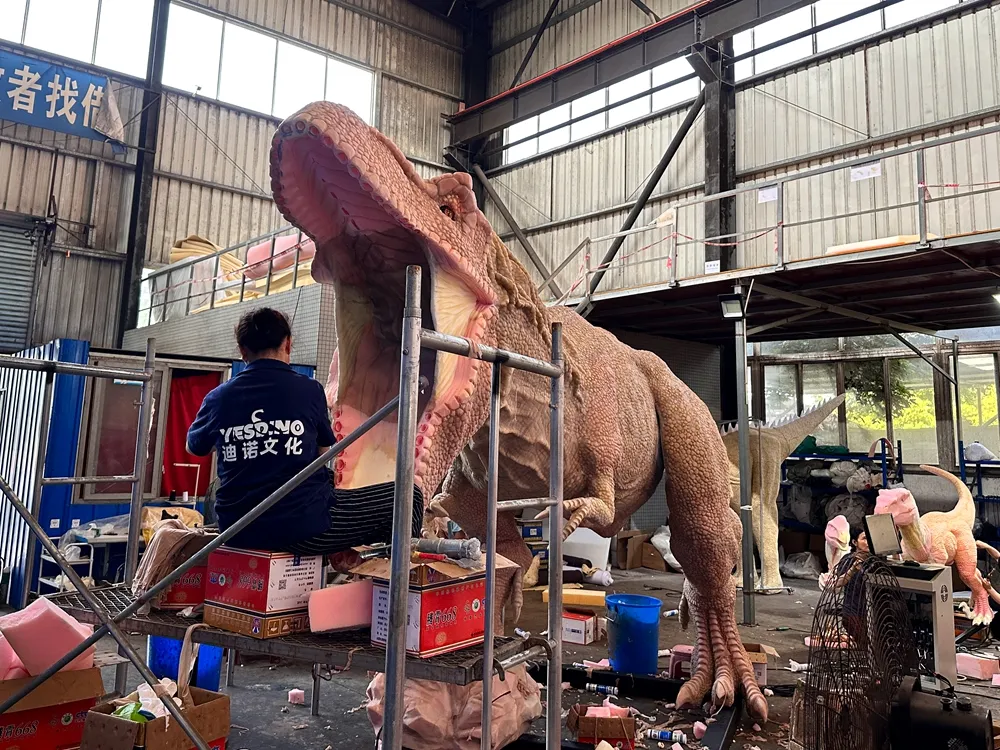
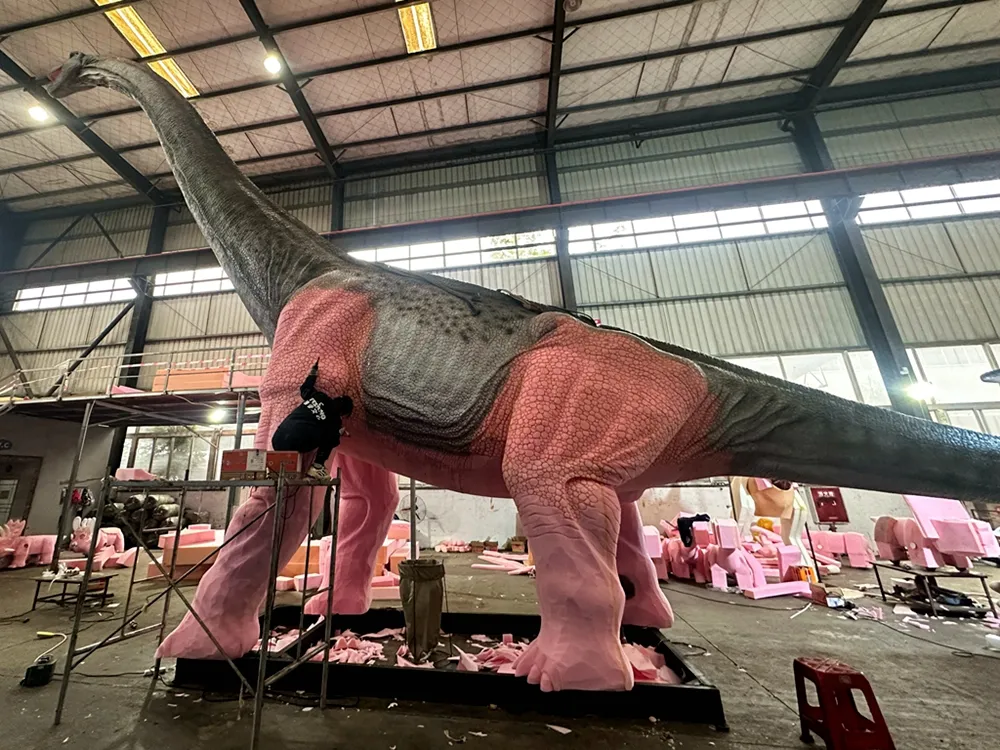
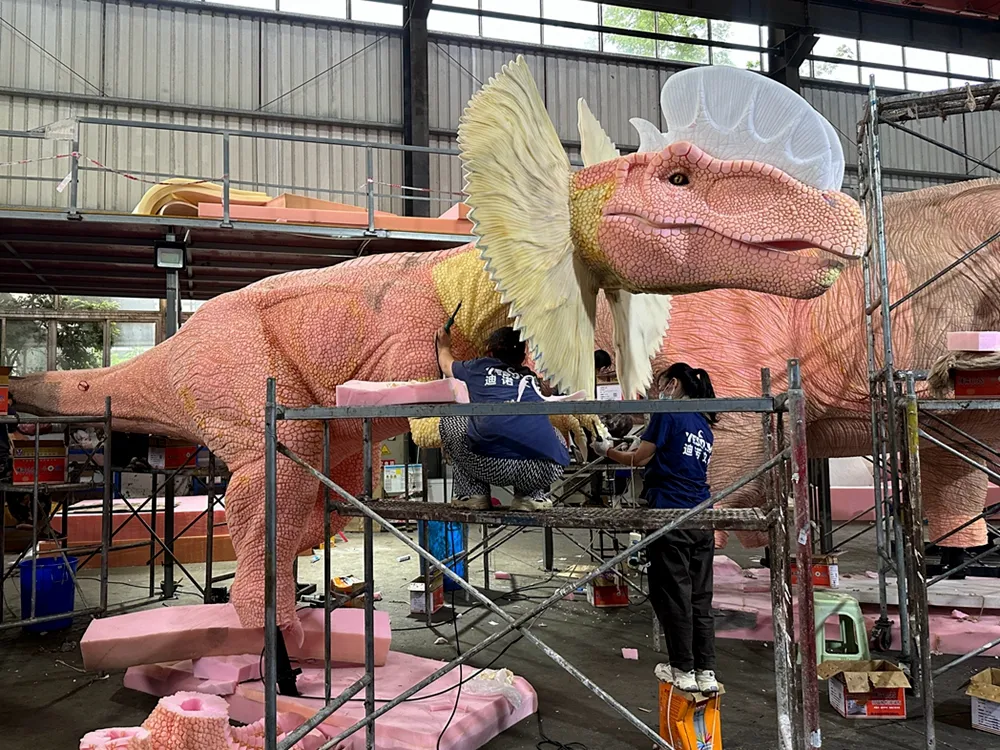
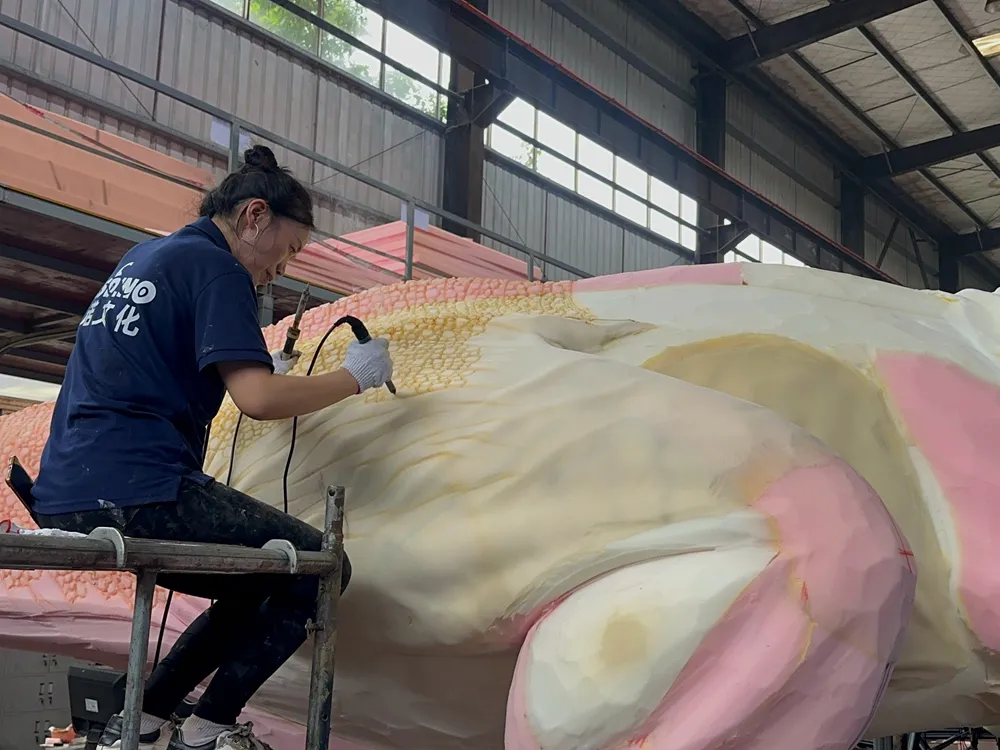
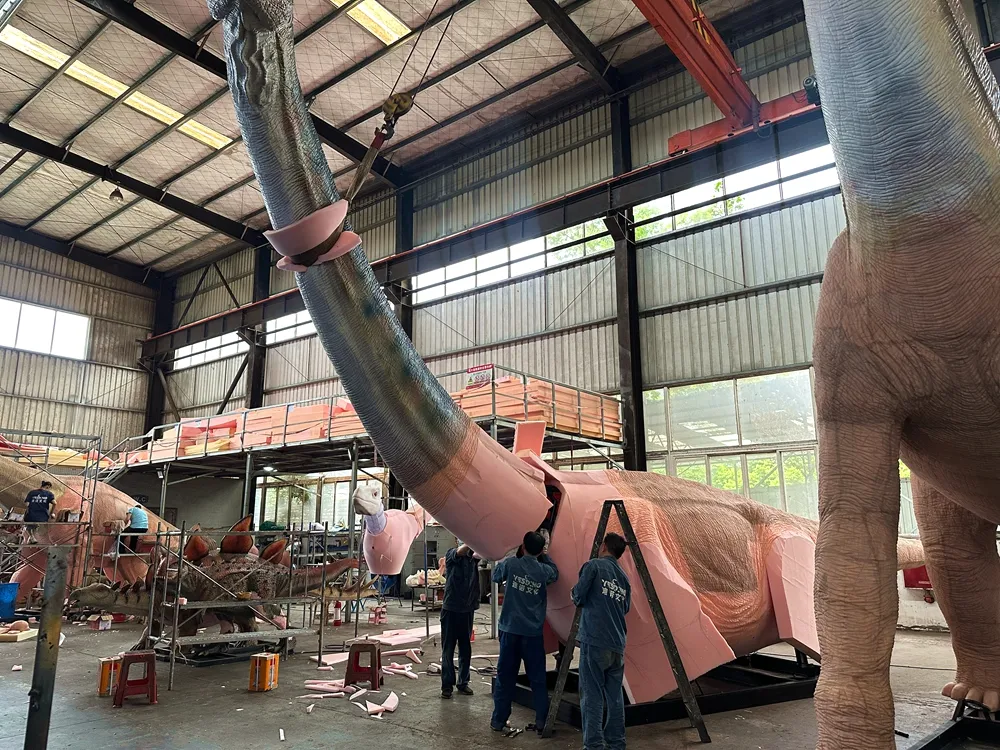
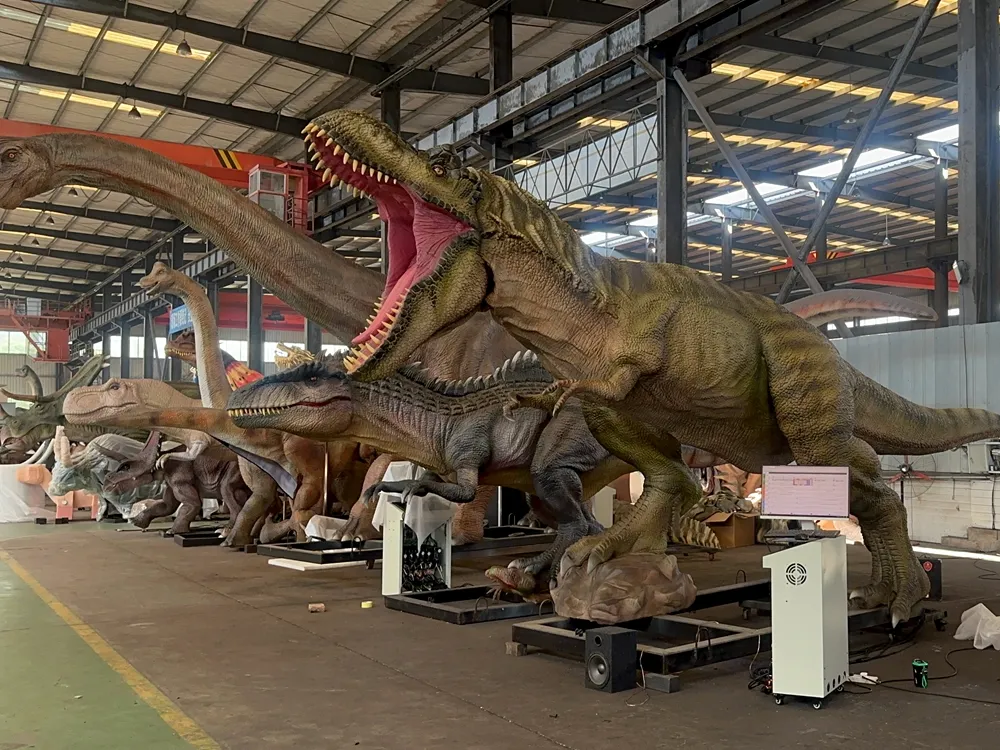
Step 3: Build a prototype to validate motion and stressStep 3 is the cheapest place in the entire project to discover a mistake. A prototype, or a partial mock-up of the critical assemblies, tests the mechanical assumptions before they are buried under foam and silicone. What a prototype actually provesA physical mock-up of the head, neck or tail assembly answers concrete questions. Does the jaw linkage reach its full travel with the actuator you specified? Does the skin compress or bind when the joint moves through its range? Does the counterweight keep the model balanced when the neck extends? Is there service access to the actuator once the skin is fitted? On larger builds, the critical assemblies are usually bench-tested as separate sub-frames, which lets the engineers adjust linkage ratios, pivot positions and actuator mounts while they are still bolted to a test rig rather than welded into a finished body. Motion is also compared against the approved 3D preview, so that the delivered movement matches what you signed off on, not just what was mechanically convenient to build. What a prototype cannot proveBe realistic about the limit of a prototype. It cannot prove site foundation behaviour, long-term skin wear, or how the model survives being disassembled, shipped in a container and reassembled on your site. Those risks are managed differently: foundation calculations for the site, accelerated cycle testing and factory run tests for the mechanics, and container packing standards for transport. For smaller models, a full physical prototype is often unnecessary and a validated motion animation plus a bench test of the jaw and neck assemblies is enough. Agree the acceptance criteria with the factory before the test: which joints are tested, how many cycles are run, what documentation you receive, and who signs. Video of the motion test should be part of the record, and it should be filmed with a measuring reference or a scale ruler in frame so you can verify travel range yourself. Step 4: Full-scale fabrication under strict material standardsFabrication runs through a fixed sequence of workshops: steel structure, electromechanical assembly, foam sculpting, skin work, and painting, followed by functional testing. Each stage has to be signed off before the next one covers it up, because once the silicone skin is bonded to the frame, correcting a weld or repositioning an actuator means removing the skin. Stage 4.1: Steel frame and mechanical assemblyThe frame is normally built from Q235 carbon steel or galvanized seamless steel tube, welded into a structure that carries the actuator loads, the skin weight and the dynamic forces of every movement. Motor, power and control components are mounted during this stage, and the whole structure is treated against rust before anything else is added. Weld strength, joint alignment and structural stability are the inspection points. On a large model, the frame is also where the counterweight and base plate are settled, so this is the last opportunity to correct balance cheaply. Stage 4.2: Foam sculpting and anatomyHigh-density sponge, fireproof sponge and pearl sponge are shaped over the frame to build body volume, muscle mass and species-specific contours. This is where proportion becomes visible at full scale, and where the sculptors match the model to the approved design pack: skull shape, neck curve, rib cage, hip structure and limb posture. Dipping or coating the foam gives the skin something to bond to and provides the soft substrate that lets a large model absorb movement without cracking. Stage 4.3: Silicone skin and textureEco-friendly silicone is applied and hand detailed into skin folds, scales and surface texture. Outdoor models use an anti-UV silicone formulation with UV-stabilized pigments, which is what allows them to survive direct sun without chalking or cracking. Skin application is the most labour-intensive stage of the whole build, and it is also the stage where craft shows: the difference between a convincing dinosaur and a mascot is almost entirely in the scale pattern, the depth of the folds and the way the skin tension changes around the jaw, neck and joints. Stage 4.4: Painting and final appearanceElectronic spray coating and airbrush work add the colour system: base tones, shading that emphasises muscle definition, darker recesses around folds, and species-appropriate detailing on the face. Eyes, teeth and claws are fitted and finished at this stage. Final appearance is inspected together with the skin texture, because paint is applied over the texture and a defect in either one is visible immediately under exhibition lighting. Stage 4.5: Control programming and function testingThe control system is programmed last, once the mechanics are complete. Movement sequences are timed against the sound track, sensors are ranged and tuned, and every function on the approved movement list is exercised. The control box, speaker and sensor are then matched to the delivery voltage and plug standard for the destination country. Testing is not a formality: the industry standard is a continuous functional run test before shipment, typically 24 hours, with the run-test video supplied to the client for approval. Ask for the run test to include the full performance cycle, not a single movement, and ask for sound level and sensor activation range to be measured rather than estimated.
Materials and components at a glance
Quality control before shipmentA structured pre-shipment inspection covers six areas. The steel frame and welds are checked for strength and stability. Electrical systems, motors, wiring and internal components are tested under load. The sculpture is reviewed for body proportion, muscle shape and overall realism. Skin texture is checked for clean detail and visible imperfections. Flexible skin application is inspected for surface consistency and adhesion. Finally, paint, eyes, teeth and other finishing details are reviewed. Only after all six pass does the model go to packing, which is also the point at which you should receive the run-test video and the final inspection photos.
Step 5: Installation, commissioning and long-term maintenanceA model that leaves the factory in perfect condition can still fail on site if the foundation, the power supply or the maintenance regime is wrong. Step 5 is where the investment is either protected or quietly eroded. Disassembly, packing and container loadingLarge models travel in sections. As a general industry rule, units taller than about 2.6 m or wider than about 2 m are disassembled for less-than-container-load shipping, and units taller than about 2.8 m are disassembled to fit a full container. Models longer than roughly 8 m are normally split into multiple parts regardless. Sensitive areas such as the eyes, mouth, claws and skin edges are wrapped in sponge and air bubble film. FCL shipments are secured directly inside the container; LCL shipments are packed in air cases or wooden cases. Ask for the packing list with section dimensions and weights at this stage, because you will need it to plan lifting equipment and access on arrival. Site preparation and foundationPrepare the site while the model is still in production. The position must be level, the base must be able to carry the model plus its base plate and rockery, and anchor points must align with the base plate supplied. Outdoor installations on tall models need a concrete foundation sized for wind load and an anchor pattern that will not loosen with seasonal movement. Plan the power run and drainage before the base is poured, not after. If visitors can reach the model, install the barrier or fencing line at the correct distance from the moving parts, and make sure the emergency stop is reachable by staff without entering the visitor area. Finally, confirm the unloading point can accept the largest section and that a lifting appliance of adequate capacity is available on the day of delivery. Commissioning and operator handoverCommissioning covers mechanical reassembly, calibration of each axis against the approved motion range, sensor range and timing checks, sound level measurement at the visitor line, and a run-in of the full show sequence. After that, the handover should include practical training for the people who actually operate the model: daily start and stop procedure, how to switch between automatic and sensor modes, how to isolate power safely, what to check before opening each day, and who to contact when something sounds wrong. Insist on written handover of the installation and maintenance manual, the wiring diagram, the sensor settings and the spare parts list. Manufacturers typically support this with assembly manuals, installation videos, and remote video guidance, with optional on-site engineers for larger projects. The maintenance schedule that protects the assetMaintenance is not optional, and it is the single factor that most affects how long the model stays presentable. Published service life for an animatronic dinosaur is typically ten years or more for a galvanized steel frame, three to five years for outdoor silicone skin before refurbishment, and eight years or more for skin used indoors. Those figures assume the schedule below is actually followed.
Warranty, spare parts and after-sales supportWarranty terms in this industry typically start at 24 months for the complete machine, extend to 24–60 months depending on the model, and include lifelong supply of spare parts. What matters more than the headline period is the detail: which components are covered, whether wear items such as skin and linkages are excluded, how a claim is filed, what response time is promised, and whether replacement parts are held in stock or built to order. Ask for the spare parts list with the quotation and budget for a consumables allowance from year one. Remote technical support and video-call troubleshooting are standard with most manufacturers and prevent a large share of unnecessary service visits; on-site engineer support is normally quoted separately for larger projects.
The five steps on a realistic timelineLead times in this industry are quoted from order confirmation to shipment, not from first enquiry to opening day. Standard models already in production are typically quoted at 15–30 days, with roughly four weeks as the common working figure. Fully custom builds generally run 30–60 days depending on size, movement count and complexity. On top of production you must add the design stage, sea freight and the site works, and those three items are frequently longer than fabrication.
Why the design stage is never the bottleneckNotice where the variance sits in that table. Design takes days. Production takes weeks. Freight and site works can take over a month, and they are the two phases you control least. The practical conclusion for anyone planning an opening date is to start the brief early and to hold the site works in parallel with production rather than after it. A dinosaur that reaches a finished plaza six weeks early is a marketing opportunity; the same dinosaur that arrives while the concrete is still curing is a storage problem. What actually drives the price of a custom animatronic dinosaurAnimatronic dinosaur pricing is not random, and it is not a secret. Every quotation is built from five variables, and once you know them you can compare quotes properly instead of comparing headlines. The five cost drivers
Published factory-direct price bandsThe ranges below reflect publicly listed factory-direct FOB prices from Chinese animatronic manufacturers. They are indicative only: the same species can be quoted at very different prices depending on movement count and material grade, and they exclude freight, duties and installation.
For a sense of how size maps onto price within the standard range, published single-model FOB prices from Chinese factories include a 4 m Velociraptor at roughly US$2,088, a 6 m Ankylosaurus at roughly US$3,180 and a 12 m Tyrannosaurus rex at roughly US$7,180. Note how flat that curve is between the raptor and the T. rex relative to the size difference: at the entry end of the market, the frame, control system and skin work are a large fixed cost, so a bigger body does not multiply the price the way most buyers expect. What multiplies the price is the movement list, the outdoor grade and the special effects. Payment, packing and delivery termsStandard commercial terms are a 50% deposit on order confirmation and the balance before shipment, once you have approved the run-test video. Accepted payment methods typically include bank transfer, letter of credit, credit card and Western Union. Delivery terms usually range from EXW and FOB through to CIF and DDP, and most buyers choose door-to-door delivery so that the manufacturer manages the port handling. Packing is by bubble film and sponge with an air case or wooden case for LCL shipments, or secured inside the container for FCL shipments; wooden-case packing is standard for high-value custom models. Confirm two things in the contract before you pay: who arranges and pays for unloading equipment at destination, and who carries the risk if a section is damaged in transit. Also confirm the departure port, since inland factories often ship via Shanghai, Shenzhen or Chongqing, and that choice affects both freight cost and transit time.
Five mistakes that derail custom dinosaur projectsThese are the failures that repeat across projects, and all of them are avoidable at the brief stage. Ordering before the site surveyBuying a model before measuring the access route, ceiling clearance, floor loading and power supply is the most expensive mistake in this list, because by the time the problem appears the frame is welded. Measure first, then specify. A service corridor is not a detail; it is a hard constraint on the design. Treating the movement list as flexibleMovements added after fabrication require cutting the frame, re-routing wiring, re-programming the controller and possibly re-skinning the affected area. Decide the complete list in Step 1, confirm it in Step 2, and test against it in Steps 3 and 4. Buying from a trading company instead of a factoryTrading intermediaries add a margin without adding engineering capability, and when a mechanism fails there is nobody in the chain who can diagnose it from first principles. Ask for the factory address, request a live video tour of the workshop, and ask which departments exist on site: steel welding, electromechanical assembly, sculpting and moulding, and painting should be in-house and visible. Specifying an indoor build for an outdoor siteAn indoor-grade model installed in a plaza under direct sun and rain will fail early, and the failure will be blamed on the manufacturer. Anti-UV silicone skin, IP65 sealed electricals and an anti-rust or galvanized frame are the outdoor baseline. If a supplier quotes the same price for indoor and outdoor versions of the same model, ask what the outdoor grade actually includes. Leaving maintenance and spare parts out of the budgetThe purchase price is the entry ticket, not the lifetime cost. Outdoor skin needs refurbishment within three to five years, moving parts need lubrication and inspection on a schedule, and a stocked spare parts kit is what keeps downtime measured in hours rather than weeks. Include a consumables allowance and a small annual maintenance budget in the project from day one. Buyers who do this typically report models still in service more than a decade after delivery.
How to vet a custom animatronic dinosaur manufacturerBecause every project is built to order, the supplier relationship matters as much as the specification. Use the same criteria a procurement team would use for any custom machinery purchase. Ask for documentation, not adjectivesRequest CE electrical certification for the control and power components, ISO9001 for the quality system, and any third-party inspection reports such as BV, TUV or SGS. Ask for the IP rating declaration for outdoor models in writing, along with the operating temperature range. Certificates are only useful if the model number on the certificate matches the model you are buying, so check that detail. Verify that a factory existsA manufacturer with real production has welding, electromechanical assembly, moulding or sculpting, and painting departments on one site, plus a finished-model area for run testing. Ask for a live video walkthrough rather than a brochure, ask how many units are produced per year, and ask for reference projects in your region that you can verify independently. Third-party inspection before shipment is a reasonable request on any custom order and signals that you understand how the industry works. Compare quotations like an engineerQuotes for this kind of product are only comparable when the specification matches. Ask every supplier to quote the same species, the same length, the same movement list and the same indoor or outdoor grade, then compare the itemised breakdown rather than the total. Confirm what is included as standard: the speaker, control box, remote, sensor, metal base, rockery, cables with the correct plug, installation manual and spare parts kit should all be listed explicitly. Finally, put the acceptance test in the contract: the run-test length, the video you will receive, and the point at which the balance becomes payable. Why so many of these factories are in one cityCustom animatronic dinosaur manufacturing has a geographic centre: Zigong in Sichuan Province, China. The city's dinosaur fossil site turned into an industry cluster, and a China Daily report on the sector counted 19 animatronic dinosaur manufacturers in Zigong exporting to more than 60 countries and regions. The same report described the production method as still fundamentally hand-built, with as many as 26 separate steps and teams of 10 to 20 workers taking up to 40 days to complete a single large model. That concentration is useful for buyers: it means the components, the skilled silicone and sculpting labour, and the export logistics all exist in one place, and it means a buyer can visit several qualified factories in a single trip. Frequently asked questions about custom animatronic dinosaursHow long does it take to make a custom animatronic dinosaur?A custom build normally takes 30 to 60 days from order confirmation to shipment, depending on size, movement count and any special effects. Standard models in current production take 15 to 30 days, usually around four weeks. The 3D design preview is issued within three to five working days of a confirmed brief. Add sea freight and site works on top of the production time when planning your opening date. How much does a custom animatronic dinosaur cost?Published factory-direct FOB prices for Chinese manufacturers generally fall between US$2,000 and US$6,000 for models up to 3 metres, US$6,000 to US$18,000 for standard life-size models between 3 and 8 metres, and US$18,000 to US$50,000 or more for large flagship builds of 8 to 15 metres. Giant custom models above 15 metres are quoted by design. The final figure depends mainly on size, movement count, indoor or outdoor grade, special effects and delivery scope. Can an animatronic dinosaur be installed outdoors?Yes, provided it is ordered as an outdoor build. Outdoor models use fully sealed IP65 electrical components, anti-UV silicone skin and an anti-rust treated steel frame, and they are designed to be waterproof, sunproof and snowproof. Published operating windows are commonly around minus 20 to plus 60 degrees Celsius, though suppliers quote different ranges, so confirm the exact figure for your climate in the contract. An indoor-grade model installed outdoors will deteriorate quickly and is not covered by the same expectation of service life. What movements can be programmed into a custom model?The standard set covers mouth open and close synchronized with the roar, eye blinking, head movement up, down, left and right, neck turn, abdominal breathing, tail swing and forelimb movement, with volume-adjustable sound. Optional additions include neck wiggle, upper body rotation, body travel, tongue stretch and withdraw, water spray, smoke or mist, LED eyes or illuminated mouth, and additional sound tracks. Some options, such as spray effects and body rotation, are normally only offered on models over roughly five metres. What is the minimum order quantity for a custom dinosaur?One unit. Customization covers species, size, colour, skin texture, movement count, sound and interactive control, and most manufacturers do not require a bulk order to accept a custom build. Wholesale and dealer pricing becomes available on multiple units, which is relevant if you are equipping a full park rather than a single exhibit. How is a large animatronic dinosaur shipped and reassembled?Large models travel in sections. As a rule, models taller than about 2.6 metres or wider than about 2 metres are disassembled for LCL shipping, models taller than about 2.8 metres are disassembled for FCL shipping, and models longer than about 8 metres are split into parts. Sections are wrapped in sponge and bubble film, with LCL shipments packed in air cases or wooden cases. Reassembly follows the supplied installation manual and video, with remote video guidance from the factory, or an on-site engineer for larger projects. What power supply does an animatronic dinosaur need?Most models run on 110 V or 220 V AC at 50 or 60 Hz and typically draw between 200 and 800 W per unit, with plug standards matched to the destination country such as European, British Standard, SAA or C-UL. Battery operation is available on some models for event use. Confirm the total load including lighting and sound before the site power run is installed, and provide an accessible isolator for maintenance. What warranty is provided?Warranty typically starts at 24 months for the complete machine and extends to 24 to 60 months depending on the model, and it is normally paired with lifelong spare parts supply and ongoing technical support. Before you order, confirm which components are covered, whether wear items such as skin and linkages are excluded, the claims procedure, and the promised response time. What is the service life of an animatronic dinosaur?With scheduled maintenance, the galvanized steel frame is commonly rated for ten years or more, indoor silicone skin for eight years or more before refurbishment, and outdoor silicone skin for three to five years before refurbishment. Manufacturers report models supplied in the early 2010s still in continuous service. Skin refurbishment and repainting are what extend visual life without replacing the frame or the mechanics. Do you provide installation and staff training?Installation support is normally provided as a combination of a written manual, step-by-step installation videos and remote video guidance, with optional on-site engineers for larger projects. Commissioning covers mechanical reassembly, calibration of each axis, sensor tuning, sound level checks and a full run-in of the show sequence, followed by operator training on daily start and stop, mode switching, safe isolation and pre-opening checks. Ask for the training session to be recorded so it can be passed on to new staff. Planning a custom animatronic dinosaur with YESDINOYESDINO, the export brand of Zigong Dino Culture Art Co., Ltd., builds custom animatronic dinosaurs for theme parks, museums, science centres, zoos, shopping malls and event productions. Projects run through exactly the five steps described above: a written needs assessment, a 3D design preview and engineering pack, motion validation of the critical assemblies, full-scale fabrication with a continuous pre-shipment run test, and installation with a documented maintenance schedule. To move a project forward, send four pieces of information and you will receive an itemised quotation together with a design preview. First, the species and approximate length. Second, where the model will stand and whether the site is indoor or outdoor. Third, the movements and control method you need. Fourth, your destination country and target opening date. With those four answers, the brief can be locked, the price band confirmed, and the design stage started the same week. Every quotation is itemised, so you can see exactly what is included in the frame, skin, control and accessory scope rather than comparing two headline prices for two different specifications. Ready-stock models ship considerably faster than custom builds, which matters when you are working to a fixed opening date, and the spare parts kit, warranty terms and maintenance schedule are confirmed in writing before the order is placed. |